Past Flagship projects

Smart Feeding Station: Non-Invasive, Automated IoT Monitoring of Goodman's Mouse Lemurs in a Semi-Natural Rainforest Habitat

We have developed a smart feeding station to monitor Goodman’s Mouse Lemurs, which are nocturnal. This system utilizes an RFID reader to identify the implanted chips, measures the animals' weight, and features an automated trapping mechanism to assist zoo staff in safely capturing them when necessary. The data is transmitted via LoRaWAN and made available in real time on a website. This stress-free monitoring approach minimizes disturbance to the animals, reduces the workload for zoo staff, and enables continuous data collection, supporting data-driven research on the species.
Localization and Life Signs Monitoring of Aldabra Giant Tortoises in a Zoological Setting
Aldabra Giant Tortoises are a vulnerable species, making successful reproduction programs essential for their conservation. To gain deeper insights into their behavior as well as social interactions among them, we are developing a tracking system using UWB technology to precisely monitor their movements. Combined with life-sign monitoring, this approach aims to enhance our understanding of their needs and well-being, ultimately improving their welfare and supporting successful reproduction efforts.
external page Publication / Media Explosure: external page Zoo Zürich, external page Zürcher Tagblatt
Autonomous Legged Robots
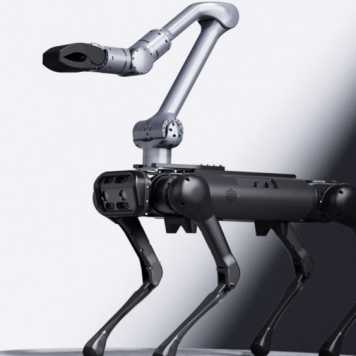
Students could have participated in the design and development of an autonomous quadruped robot for real-life applications such as blind person assistance and other applications. They worked with embedded
systems, sensors including cameras and LiDARs, embedded control, hardware and software design, controlling robotic arms, and with state of art legged robots from Unitree..
Nano-Drones
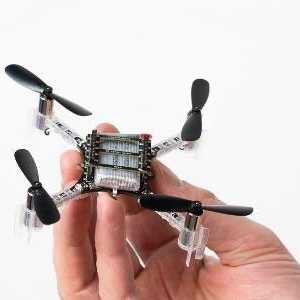
Flying a drone with a remote controller is cool, making a nano-drone autonomously flying everywhere is mind-blowing. Based on the commercial opensource nano-drone Crazyflie 2.1 students were able to design, build, and test their own idea, including weight-optimized hardware, novel sensors, real-time perception and ML models. Imagine a 27 grams drone, completely autonomous, navigating among people and random objects. external page check out the video
ForzaETH autonomous racing
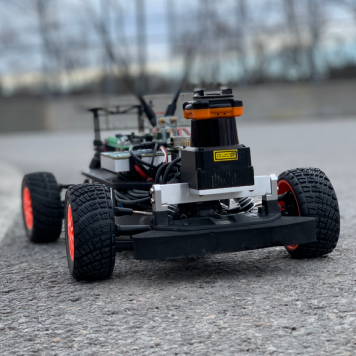
Develop and implement novel robotic algorithms in the context of autonomous racing. The students had the opportunity, to test their
work on multiple physical robotic systems. external page check out the video
Robotic Sailing
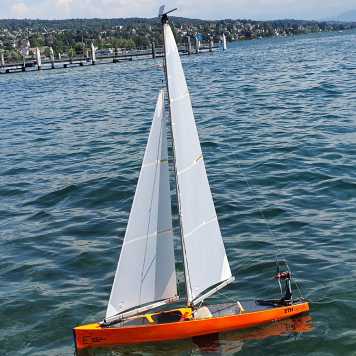
The students had the opportunity to work with embedded systems under space and low-power constraints.
They could improve their boat in the following areas:
▪ Telemetry link to base station
▪ Optimize Sensors and design new ones (e.g. wind speed)
▪ Path planning and Control